Mesothelioma, also known as Malignant Mesothelioma, is a rare form of cancer, a neoplasm originating from the mesothelial surface lining cells of serous cavities. Cancer cells found in the sac lining of the chest cause pleural mesothelioma and cancer cells found in the abdomen cause peritoneal mesothelioma. Most people with mesothelioma have worked on jobs where they inhaled asbestos. Workers exposed to asbestos in the 1940's, 50's, 60's and 70's, through no fault of their own, are now getting these diseases due to the long latency period of asbestos disease. The rarity of mesothelioma means it can be classified as an orphan disease, but there are many clinical trials for new treatments underway. The purpose of this site is to assist and empower people who have been diagnosed with mesothelioma. It is important that patients and their families understand their options in coping with mesothelioma to make an educated decision.
Malignant mesothelioma is a type of cancer in which cancer cells grow
in the protective lining (called the mesothelium) of internal organs.
Almost always caused as 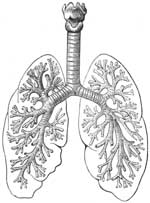 a
result of asbestos inhalation, the disease most frequently affects the
pleura that lines the chest cavity and lungs.
a
result of asbestos inhalation, the disease most frequently affects the
pleura that lines the chest cavity and lungs.
More on the epidemiology of this disease.
Diagnosing Mesothelioma
Before a plan for treatment can be developed, a proper diagnosis of malignant mesothelioma must be accomplished. This can be difficult, however, as the early stages of the disease may either go unnoticed or falsely indicate a different disorder. For example, mesothelioma is sometimes misdiagnosed as other forms of cancer, such as lung or adenocarcinoma.
Further complicating diagnosis, is the amount of time between asbestos inhalation and the manifestation of mesothelioma. In many cases, the disease does not surface until decades after exposure. This long latent period often means that patients are unaware of their high risk for contracting malignant mesothelioma. In such cases, doctors may perceive early symptoms as minor ailments, rather than a more serious asbestos-related cancer. Early symptoms that may indicate mesothelioma include:
- Shortness of breath
- Pain under the rib cage
- Swelling or lumps in the abdomen
- Unexpected weight loss
Once mesothelioma is suspected, the patient's doctor will perform a number of procedures to validate the diagnosis. This includes chest x-rays, a complete blood count test, biopsy and other methods.
Stage I Mesothelioma Treatment Options
Following diagnosis, the doctor will perform tests to determine the cancer's stage of progression. The tests will determine if cancer cells remain localized to the chest and lungs (stage I) or have advanced to other areas of the body, such as the lymph nodes (stage II, III and IV). Treatment options depend largely on the stage of disease advancement upon initial diagnosis. Surgery is useful for pallative purposes - controlling pleural effusions. Surgery is usually done in combination with adjuvant chemotherapy, radiotherapy, immunotherapy, or other treatment.
If the mesothelioma remains localized, then the patient has a much better chance at cancer survival. If caught early enough, treatment may even result in a cure. In most stage I mesothelioma cases, surgery will be required to remove the area of the chest wall or lining of the lungs that is infected with the cancer cells (pleurectomy). If necessary, sometimes an entire lung is removed along with a portion of the chest lining (extrapleural pneumonectomy).
In most cases, surgery will be complemented by radiation therapy and/or chemotherapy in an effort to further fight the cancer and improve the chances of curing the disease. Immunotherapy may also be prescribed, which is any attempt to raise the body's ability to fight the cancer on its own.
Radiation is not always used as this cancer does not respond well to it, and the shape of the tumor (diffuse) makes it difficult to direct the radiation to the cancerous areas. Intensity-modulated radiotherapy has some use, and is mostly employed after extrapleural pneumonectomy.
Advanced Mesothelioma Treatment Options
Unfortunately, treatment options are severely limited once mesothelioma has spread to other parts of the body. In such cases, treatment is largely palliative in nature. Palliative care is defined as treatment that focuses on reducing symptoms and making the patient more comfortable rather than working to slow or cure the disease. Advanced mesothelioma treatment options include:
- Removal of fluid buildup in the chest to minimize discomfort
- Pleurodesis: a procedure that closes off the pleura and prevents fluid accumulation
- Surgery to remove tumor tissue and relieve pain
- Radiation and/or chemotherapy
- Clinical trials that feature potentially new medications and treatment processes
- Pain control
Ensuring Proper Treatment
Due to mesothelioma's negative reputation, many doctors unfamiliar with
treating the disorder are quick to write off the ability to cure the disorder.
In such cases, palliative care may be prescribed when life-extending surgery
may still be a viable treatment. Because of this, it is recommended that
mesothelioma patients seek treatment from a health care center or health
care professional that has extensive experience treating mesothelioma.
Specifically, large cancer centers that treat dozens of mesothelioma patients
each year are more likely to offer the most effective and cutting-edge
treatments available.
A glossary of mesothelioma-related terms is included, and an explanation of the current understanding of the pathogenesis of mesothelioma.
Our page on the rights of a mesothelioma patient.